
Kite blog
EPR Fees Explained: What UK Businesses Need to Pay and Why
Extended producer responsibility has introduced a new way for UK businesses to manage packaging waste. Under this system, companies that place packaging on the UK market must now cover the full costs of its collection, recycling, and disposal.
These EPR fees replace much of the funding previously handled by local authorities. Instead of relying on public funding, businesses are now responsible for paying for household packaging waste that ends up in bins or public bins.
For many organisations, understanding EPR fees starts with knowing what applies to their business, how fees are calculated, and when payments are due.
In this guide, we explain how packaging EPR fees work, what costs to expect, and how to stay compliant under extended producer responsibility.
Table of Contents
- What Are EPR Fees Under Extended Producer Responsibility?
- Who Needs to Pay EPR Fees in the UK Market?
- The Main Types of Packaging EPR Fees Businesses Pay
- Registration Fees and Compliance Costs
- Base Fees for Packaging Waste Management
- Modulated Fees and Recyclability Assessments
- PRNs, PERNs and Additional Payments
- How EPR Fees Are Calculated and Invoiced
- Key Dates, Payments and Reporting Requirements
- The Impact of EPR Fees on UK Businesses
- How Businesses Can Reduce EPR Fees
- Non Compliance and Why It Matters
- Final Thoughts on EPR Fees for UK Businesses
What Are EPR Fees Under Extended Producer Responsibility?
Extended producer responsibility EPR is a system that makes producers responsible for the entire lifecycle of their packaging. This includes what happens after it becomes waste. EPR fees are the payments businesses must make to cover the collection, recycling, and disposal of household packaging waste. This includes packaging that ends up in household bins or public bins across the UK.
The government oversees the system, while the scheme administrator, PackUK, manages how fees are set and distributed. These fees help fund packaging waste management and reduce the burden on local authorities.
Who Needs to Pay EPR Fees in the UK Market?
EPR fees apply to producers that place packaging on the UK market, but obligations depend on business size. Small and large producers are defined using annual turnover and the total amount of packaging handled each year. In simple terms:
- small producers usually have a turnover above £1 million and handle over 25 tonnes of packaging
- large producers have a turnover above £2 million and place more than 50 tonnes on the market
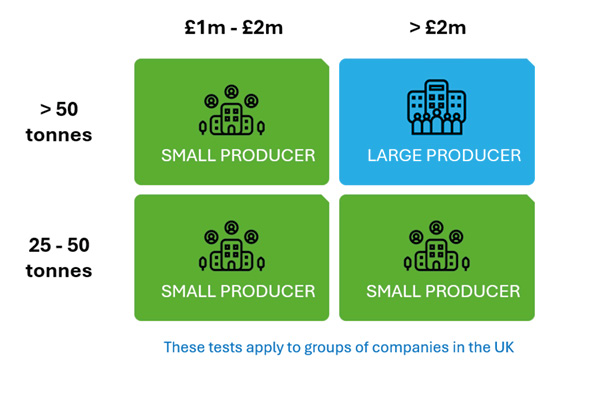
Small producers must register and report packaging data, but their costs are lower. Large producers carry more responsibility. They must report packaging data more often and pay disposal fees based on the total weight and type of packaging.
As a result, large businesses face higher costs, more reporting duties, and greater scrutiny from the environmental regulator.
The Main Types of Packaging EPR Fees Businesses Pay
EPR fees are not a single payment. Most businesses will deal with several types of fees, depending on how much packaging they place on the market and the materials used.
These fees cover registration, disposal, and recycling obligations, and together they form the total costs of compliance under the EPR scheme.
Registration Fees and Compliance Costs
All obligated producers must register with the environmental regulator, such as the Environment Agency, or join approved compliance schemes. This involves paying registration fees, setting up an account, and submitting packaging data. Many businesses also receive invoices for ongoing services if they use a scheme. Alongside these fees, there are compliance costs linked to data collection, reporting, and managing deadlines.
Base Fees for Packaging Waste Management
Base fees are the main cost linked to packaging waste. These fees are calculated using a base fee rate per tonne of packaging material placed on the market. Different materials have different rates, including plastic, paper, glass, and steel. These charges mainly apply to household packaging, as this type of waste is collected and managed by local authorities.
Modulated Fees and Recyclability Assessments
Modulated fees adjust the base fees depending on how recyclable packaging is. This is measured through recyclability assessments using the RAM system. Materials that are easier to recycle usually have lower fees, while harder-to-recycle formats attract higher charges. For example, fibre based composites and certain plastic materials can lead to increased costs due to their complexity.
PRNs, PERNs and Additional Payments
Large producers must also purchase PRNs or PERNs to show that packaging waste has been recycled. These payments are separate from base fees and can change depending on market conditions. Prices often rise or fall based on recycling demand and supply, which can affect total costs and make budgeting more difficult.
How EPR Fees Are Calculated and Invoiced
EPR fees are calculated using the packaging data that producers collect and submit. This includes the total weight of packaging, the material category, and the type of packaging reported. Data accuracy is important, as errors can lead to incorrect invoices or compliance issues. Fees are then calculated using set rates per tonne and issued as invoices by the scheme administrator.
Most large producers report data in stages, including the first half of the year, which helps determine payments. To avoid issues, businesses must submit data correctly and keep clear records of all packaging placed on the market.
Key Dates, Payments and Reporting Requirements
EPR follows a set timeline, and businesses must stay on top of key dates to remain compliant. This includes registering by the required deadlines, submitting packaging data through the government reporting portal, and paying invoices when issued. In general:
- registration must be completed before reporting begins
- packaging data must be submitted at set intervals
- payments are issued after data is reviewed and calculated
Large producers usually report more often, while smaller businesses report less frequently. In both cases, regular data submissions are essential to meet EPR requirements and avoid penalties.
The Impact of EPR Fees on UK Businesses
EPR fees are now a key cost for many UK businesses that place packaging on the market. Small and large producers face different levels of responsibility, but both must manage data, reporting, and payments.
For large producers, costs can increase quickly due to higher volumes and more complex materials. These fees also influence packaging decisions, as businesses look to reduce waste and improve recyclability. Over time, this shift supports a more circular economy across the UK market.
How Businesses Can Reduce EPR Fees
Businesses can take practical steps to lower their EPR fees and manage total costs more effectively:
- reduce the total amount of packaging used where possible
- switch to recyclable materials like paper and card
- avoid complex formats such as fibre based composites
- improve data accuracy when reporting packaging data
- work with compliance schemes to manage reporting and payments
These changes can help reduce fees while improving compliance and supporting recycling efforts.
Non Compliance and Why It Matters
Failing to meet EPR requirements can lead to penalties and increased costs for businesses. This includes late submissions, incorrect packaging data, or failure to register. The environmental regulator and Environment Agency monitor compliance and can take action where needed.
Non compliance can also affect how businesses manage invoices, payments, and reporting obligations, making it important to stay accurate and up to date.
Final Thoughts on EPR Fees for UK Businesses
EPR fees have changed how UK businesses manage packaging and waste. Producers are now responsible for the full cost of collection, recycling, and disposal. This makes accurate packaging data, clear reporting, and informed material choices more important than ever.
While costs can vary depending on packaging type and volume, businesses that plan ahead can reduce their fees over time. Reviewing packaging, improving data accuracy, and staying on top of reporting requirements all help control costs and avoid issues.
If your business needs support with EPR fees or reporting packaging data, contact Kite Packaging to see how our team can help you stay compliant and manage your costs.
