

Medium insulated protective safety gloves
£5.99 inc VAT
(£4.99 ex VAT)
each
Kite Packaging’s dry ice is perfect for cold chain shipping and more.
- Available as slices and pellets
- 10kg, 20kg, 30kg and 40kg pack quantities
- Great for flash freezing and shrink fitting metals
- Keeps cool up to 72 hours and leaves no residue
- Shipped on next day delivery
- Do not ingest or use with drinks – this dry ice is for packaging and industrial use only.
Download handling guidelines here
Download safety data sheet here
Please note - Order must be placed by 12pm in order to receive the next working day. After this, you will receive the following working day excluding orders placed on a Friday - Goods will be delivered the following Tuesday.
By purchasing dry ice I (the buyer) have read and understood the SDS and handling information as detailed and accept all associated liability / risks.
We have recently added new items to this range (highlighted below)
Dry Ice





Loading products
Dry Ice
Our dry ice (solid carbon dioxide) is perfect for cold chain shipping, keeping your products colder for longer without the mess that moisture leaves. Supplied as slices or pellets, it comes in practical pack sizes (10kg, 20kg, 30kg and 40kg) so you can pick the right format for the job.
Typical applications include:
- Cold chain shipping, for frozen foods, pharmaceuticals, vaccines, biological samples
- Dry-ice blasting and precision cleaning for manufacturing, fire-damage restoration and mould remediation
- Events and films, used to create thick, low-lying fog effects when added to warm water
- Labs and research, for flash freezing and specimen preservation
- Engineering for shrink-fitting metals
- Specialist tasks, for targeted pest control in enclosed burrows
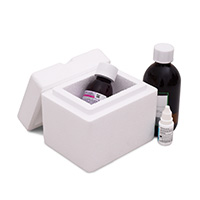
Dry ice pairs perfectly with two of our thermal box liners/pouches; polystyrene boxes and wool insulation packaging for shipping temperature-sensitive goods.
Safety
Dry ice is a powerful cooling agent but requires strict handling and storage controls. Below are clear, practical safety points to follow when you handle dry ice.
Storage
- Store only in well-ventilated areas as CO₂ gas can accumulate and displace oxygen, creating asphyxiation risks
- Do not store in basements or pits where heavier CO₂ gas can collect
- Always use forklifts or mechanical lifting to move large containers of dry ice
- Keep out of direct heat and sunlight as these speed up sublimation. Better insulation gives your dry ice a longer life
- Do not use airtight containers as these allow pressure to build and can cause bursting as dry ice sublimes
- Prevent unauthorised access and handle with care, opening lids fully and approaching with caution
Transportation
- Do not carry dry ice in the vehicle cabin or passenger compartment. If unavoidable, ensure strong ventilation (e.g., an open window). Even in cold weather, sublimation produces CO₂ gas
- Always ventilate before unloading and carry the dry ice material safety data sheet in the driver’s compartment
- Secure the load to prevent movement and impact damage during transit
- The weight of the dry ice stated on the website is based on the dispatch weight. This weight will be less on delivery dependent on various external factors
- For any packaging stated as compatible, customers should validate suitability before implementation and check their courier’s specific requirements for sending parcels containing dry ice, as these vary between couriers and some may not accept dry ice shipments at all.
Working with dry ice
- Using dry ice can generate hazardous CO₂ concentrations. Seek professional advice on ventilation and assess under applicable regulations (for example, UK COSHH)
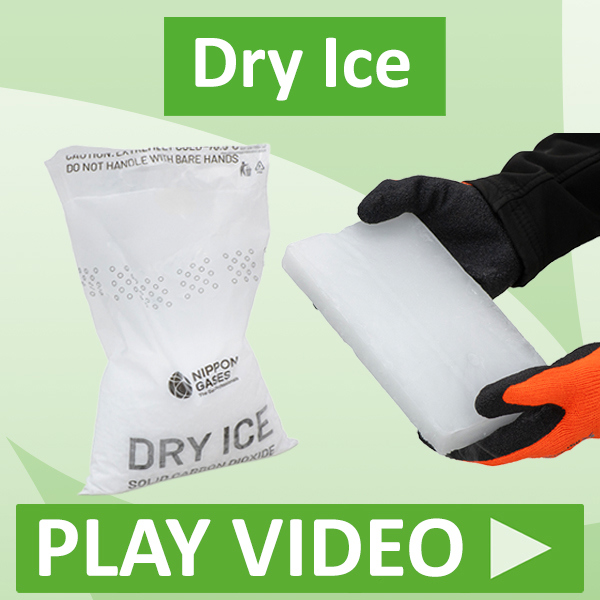
- Use insulated gloves or tongs as direct contact causes severe cold burns and frostbite
- Keep away from children and unauthorised persons
- Do not place dry ice in domestic refrigerators or freezers
- Use insulated containers for short-term storage and transport to slow sublimation
Compatibility
Our dry ice is only compatible with our polystyrene and wool insulation solutions. See our compatibility table below.
| Kite thermal solution | Polystyrene boxes | Wool box liners & pouches | Paper padded box liners | Standard foil box liners & pouches | Premium foil box liners & pouches |
| Compatible with dry ice? | Yes | Yes (Excludes use with mailing bags) | No | No | No |
Safe disposal
- Dispose of surplus in a well-ventilated, secured area away from children, pets and low-lying depressions (garage pits, drains or confined spaces)
- Do not discard where CO₂ can collect
- Recycle any leftover packaging where possible.
Personal protective equipment
The following are recommended when handling dry ice:
- Safety glasses with side shields
- Insulated protective gloves
- Safety shoes
Frequently Asked Questions
Here are answers to some of the most frequently asked questions we get about dry ice.
What is dry ice?
Dry ice is a solid form of carbon dioxide (CO₂). Unlike ice made from water, it doesn’t melt to a liquid. Instead sublimates directly to a gas, producing a foggy effect caused by the cold CO₂ condensing moisture in the air.
What is dry ice used for?
When cold temperatures are needed without water or residue being left behind, dry ice is the go-to. It is used for cold chain shipping, laboratory freezing, dry ice blasting for industrial cleaning, special effects in theatre and film, shrink fitting in engineering and some special pest control tasks.
How long does dry ice last?
Large blocks last longer than pellets because they have less exposed surface area. Dry ice typically sublimates at around 2-5kg per 24 hours.
In the following circumstances, it sublimes in:
- 1-3 days in a high-quality insulated cooler
- 18-24 hours in a standard cooler
- 3-5 hours in open air at room temperature
What is dry ice blasting?
Dry ice blasting is an industrial cleaning method that propels small dry ice pellets at high speed onto a surface to remove contaminants like grease, paint, mould, adhesive, soot or product residue. When the cold pellets hit the warmer surface, the contaminant layer rapidly contracts and cracks, breaking its bond. Since dry ice turns from solid to gas on impact, it lifts away the debris, leaving a clean surface behind.
Is dry ice harmful?
Yes, dry ice is an incredibly harmful material and must be handled correctly.
Hazards include:
- Frostbite and severe skin injury
- Headaches, dizziness, breathlessness, confusion and in extreme cases unconsciousness in poorly ventilated areas
- Explosion risks if stored incorrectly in sealed containers as CO₂ gas accumulates and pressure builds
- Internal injuries if ingested caused by gas expansion
How should I store dry ice after delivery?
Dry ice is best kept in a thick, insulated cooler with a lid that allows the gas to escape. Store in a cool, ventilated spot, and minimise opening the cooler as contact with warm air can speed up sublimation.
Who should use dry ice?
It is intended for industrial and professional users and a risk assessment is always needed when handling dry ice.
Why do businesses choose dry ice?
A cost-effective choice, it’s great for applications where meltwater or secondary waste is unacceptable. It reduces downtime in cleaning and delivers consistent temperatures for frozen foods and temperature-sensitive products.
What are the limitations of dry ice blasting?
Dry ice is a premium precision cleaning option best used where contamination control and minimal downtime justify the cost. Because of it’s physical properties, dry ice is not suitable for delicate thin materials, heavy corrosion removal at large scales, or environments without proper ventilation.