
Extended Producer Responsibility (EPR)






Extended producer responsibility (EPR) is a key part of the UK’s approach to managing packaging waste and encouraging a more circular economy. The legislation makes producers responsible for the full net costs of collecting, recycling and managing household packaging waste once it reaches the post consumer stage.
By shifting financial responsibility onto packaging producers, the extended producer responsibility system aims to improve recycling efforts, reduce environmental impact and ensure packaging is designed with its entire lifecycle in mind.
Across the UK market, organisations that place packaging on the market must now report packaging data and understand their obligations under producer responsibility regulations. Whether a company imports packaged goods, supplies empty packaging, sells products under its own brand or operates within a complex supply chain, extended producer responsibility legislation affects how packaging activities are recorded and managed.
Understanding how packaging extended producer responsibility works is an important step for UK organisations seeking to remain compliant while contributing to a more circular economy.
What is Extended Producer Responsibility
Extended producer responsibility (EPR) is UK legislation that makes packaging producers responsible for the environmental impact of the packaging they place on the market. The aim is to reduce packaging waste and move towards a more circular economy where materials are reused and recycled more effectively.
Under the extended producer responsibility system, businesses that supply packaging or packaged goods must collect and report packaging data. This helps regulators understand how much household packaging enters the waste management system and ensures producers contribute to recycling costs once packaging reaches the post consumer stage.
Do I Need to Comply With EPR?
Many organisations across the UK market must comply with extended producer responsibility legislation. The rules apply to businesses involved in packaging activities such as importing, filling or supplying packaging.
Your business may need to comply if you:
- import packaging or packaged goods
- sell goods under your own brand or with the company’s logo on the packaging
- supply empty packaging to other businesses
- sell packaged goods through an online marketplace
- place packaged goods onto the UK market
These businesses must record packaging data and, in some cases, report packaging data to the environmental regulator. The exact requirements depend on business turnover and the amount of packaging supplied.
Small Producers
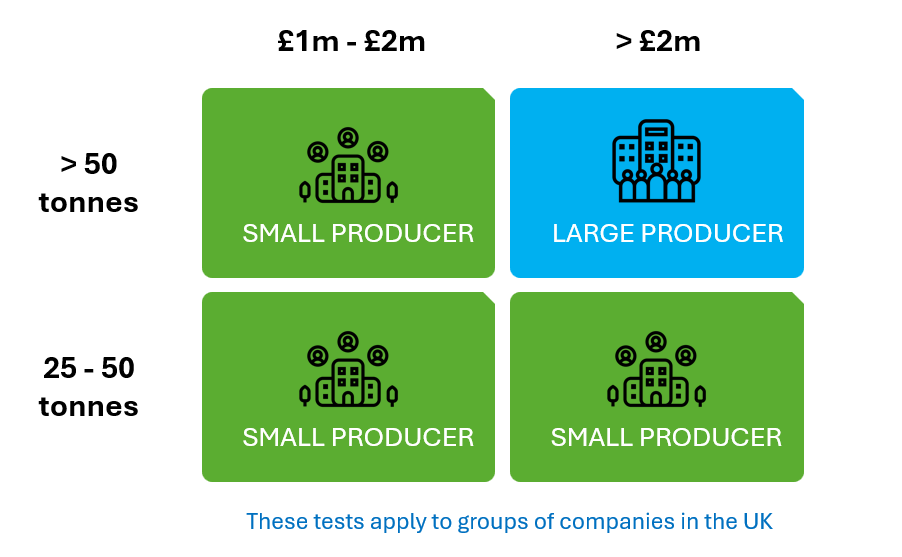
Small producers are businesses with a business turnover between £1 million and £2 million that supply more than 25 tonnes of packaging each year.
These organisations are still part of the extended producer responsibility framework. They are typically required to record packaging data relating to the packaging supplied, including empty packaging and packaged goods.
Although small producers may have fewer reporting obligations than larger organisations, they still play an important role in improving recycling efforts and supporting a more circular economy across the UK market.
Large Producers
Large producers are businesses with a business turnover of more than £2 million that supply over 50 tonnes of packaging each year. These organisations have more detailed responsibilities under extended producer responsibility legislation.
Large producers must report packaging data regularly and provide nation data showing where household packaging is supplied across the UK nations. They may also need to join an approved compliance scheme and pay EPR fees based on the volume and type of packaging they place on the market.
These fees help cover recycling costs and support local authorities in managing household packaging waste. The aim is to ensure packaging producers take greater financial responsibility for waste management and help improve recycling targets across the UK market.
Kite’s Route to EPR Compliance
Extended producer responsibility can feel complex, especially for organisations managing packaging across large supply chains. Kite Environmental Solutions supports businesses in understanding their obligations and building practical systems to remain compliant.
Our team can help organisations:
- identify packaging activities across their supply chain
- record packaging data and report data correctly
- understand EPR fees and waste management policies
- review packaging materials and raw materials used in packaging
- explore opportunities to reduce packaging waste and introduce reusable packaging
By working with experienced packaging specialists, businesses can simplify compliance while improving efficiency and reducing environmental impact.

EPR and the Circular Economy
Extended producer responsibility is designed to support the transition towards a more circular economy. Instead of treating packaging as disposable waste, the system encourages businesses to consider the entire lifecycle of packaging materials.
By making producers responsible for recycling costs and waste management, EPR schemes aim to improve recycling efforts and reduce household packaging waste. The legislation also encourages businesses to rethink packaging design, reduce unnecessary materials and introduce more sustainable packaging solutions.
In the long term, this approach helps reduce environmental impact, protect human health and create a more efficient system for managing packaging waste across the UK market.
Get Help With EPR Compliance
Extended producer responsibility legislation can be complex, especially for organisations managing packaging across large supply chains. Understanding your packaging activities, collecting packaging data and reporting nation data correctly are all important parts of remaining compliant.
Kite Environmental Solutions supports UK organisations in navigating the extended producer responsibility system. Our team can help you understand your obligations, review packaging supplied and build processes that support compliance while reducing packaging waste.
If you would like support with EPR compliance or have questions about how the legislation affects your business, our team is here to help.
Call: 02476 420080
Email: EPR@kitepackaging.co.uk
Frequently Asked Questions
Below are answers to some of the most common questions businesses ask about extended producer responsibility and packaging compliance.
What is extended producer responsibility (EPR)?
Extended producer responsibility (EPR) is legislation that makes producers responsible for the packaging they place on the market. Under the extended producer responsibility system, businesses must report packaging data and may need to contribute towards the recycling costs of managing packaging waste once it reaches the post consumer stage.
Who needs to comply with EPR legislation?
Many packaging producers must comply with EPR legislation. This includes businesses that import packaging, supply empty packaging, sell packaged goods under their own brand, or place packaged goods onto the UK market. The exact obligations depend on business turnover and the volume of packaging supplied.
What packaging data do businesses need to report?
Businesses may need to report packaging data relating to the packaging they place on the market. This can include details about packaging materials, the amount of packaging supplied, and where household packaging is distributed across the UK nations. Large producers must also report nation data to the environmental regulator.
What are EPR fees?
EPR fees are charges that help cover the net costs of collecting, sorting and recycling household packaging waste. These fees support local authorities and the wider waste management system responsible for handling packaging waste across the UK.
What is a compliance scheme?
A compliance scheme helps packaging producers meet their producer responsibility obligations. These schemes support organisations with reporting requirements, managing recycling obligations and ensuring they follow extended producer responsibility legislation correctly.