


Durable refuse sacks and bin bags for everyday, commercial, and industrial waste collection. Available in a choice of capacities, duty grades, and colours. The range includes options for standard bins, compactors, and wheelie bins.
- Exceptionally strong, tear- and puncture-resistant polythene, drop-tested up to 25kg to handle heavy, wet and awkward waste without splitting
- Full range of strengths from light duty to super heavy duty (71–236 gauge), so there's a sack matched to every job
- Capacities from 70 up to 240 litres, including catering sacks, compactor sacks and wheelie bin liners
- Available in black, clear and coloured (red, green, blue and yellow) for easy waste separation and recycling
- Sold in bulk boxes with fast UK delivery, ideal for offices, busy sites, catering and resale
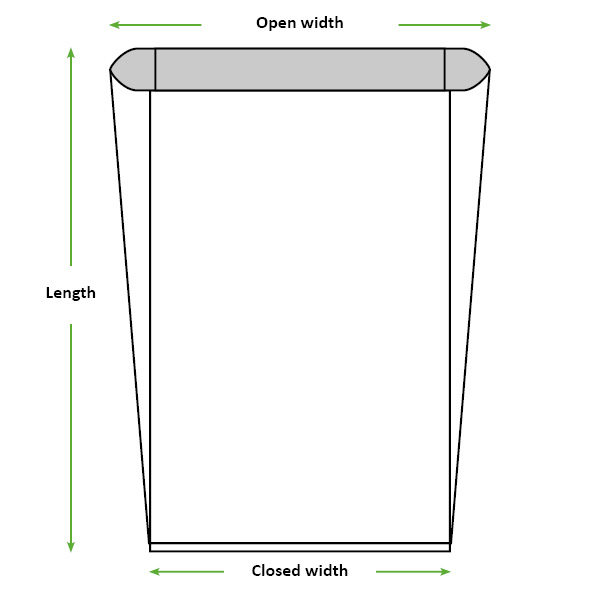
- Measurements shown are internal dimensions: closed width x open width x length
- All bags are made with 100% recycled content
We have recently added new items to this range (highlighted below)
Bin bags








Loading products
Refuse Sacks for Everyday Waste Disposal
Our range of refuse sacks provides a practical solution for everyday waste disposal in domestic, commercial, and industrial environments. Also known as bin bags or bin liners, they're suitable for collecting and handling a wide variety of waste while helping to keep bins clean and hygienic.
Available in different sizes, colours, and strengths, our range of refuse sacks is designed to meet a variety of waste management requirements. Whether you're looking for black refuse sacks for general waste, clear sacks for sorting materials, or heavy duty options for demanding tasks, we offer products to suit your needs.
Our range includes:
- Light duty refuse sacks
- Medium duty refuse sacks
- Heavy duty refuse sacks
- Extra heavy duty refuse sacks
- Super heavy duty refuse sacks
- Extra wide catering sacks
- Wheelie bin liners
- Compactor sacks
- Refuse sacks on a roll
If you're unsure which refuse sacks best suit your requirements, contact our team for expert advice.
Light, Medium and Heavy Duty Refuse Sacks
Choosing the right refuse sack depends on the type and weight of waste you need to handle. Our range covers everything from light everyday office rubbish to heavy, wet and industrial waste, with strength indicated by both gauge and drop-test rating:
- Light duty - (71 gauge, 10kg drop test) – Ideal for lightweight everyday waste, including paper and general office rubbish.
- Medium duty - (87 gauge, 15kg drop test) – Suitable for routine waste disposal in workplaces, kitchens and commercial environments.
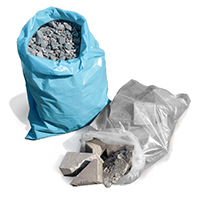
- Heavy duty - (106 gauge, 20kg drop test) – Designed to handle heavier or wetter waste where extra strength and durability are required. For construction debris and similar materials, you may wish to consider our rubble sacks.
- Extra heavy duty - (177 gauge, 25kg drop test) – A strong option for more demanding cleaning tasks and industrial applications.
- Super heavy duty - (236 gauge, 25kg drop test) – Our thickest and most robust refuse sack, built for the most demanding industrial and trade waste.
Every option from medium duty upwards holds a generous 90 litres, so you can step up in strength without losing capacity.
Colours and Sizes Available
Our refuse sacks are available in a choice of sizes and colours to support different waste management requirements. Choose black sacks for general waste, clear sacks where contents need to be visible (useful for security checks and office recycling), or coloured sacks to separate waste streams at source. Our red, green, blue and yellow medium-duty sacks make it easy to colour-code recycling, food waste and general rubbish across a site.
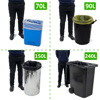
Sizes range from 70-litre light-duty sacks up to 100-litre catering sacks, 150-litre compactor sacks and 240-litre wheelie bin liners, so there is an option for everything from a desk-side bin to a large outdoor container.
Refuse Sack Sizes, Gauges and Capacities
All of our refuse sacks are made from low-density polythene and sized by their internal dimensions. The table below sets out the full range so you can compare size, thickness (gauge), capacity and strength at a glance.
- Gauge - refers to the thickness of the polythene film. As a rule, the higher the gauge, the thicker and stronger the sack, our range runs from 71 gauge for light duty up to 236 gauge for super heavy duty.
- Litres - show the approximate holding capacity of each sack, from 70 litres up to a 240-litre wheelie bin liner.
- Drop test - indicates the weight each sack is designed to hold, tested from 10kg up to 25kg. (Wheelie bin liners are designed as liners rather than for lifting, so no drop-test figure applies.)
Specialist Refuse Sacks
Alongside our standard black and coloured sacks, we stock a number of specialist options for specific requirements:
- Refuse sacks on a roll – Supplied 20 bags per roll for tidy storage and easy dispensing, ideal for kitchens, washrooms and high-turnover areas.
- Extra wide catering sacks – A wider 100-litre sack (18 x 32 x 38") designed for busy catering and hospitality settings that generate bulkier waste.
- Compactor sacks – Extra-large, heavy-gauge 150-litre sacks (available in black or clear) built to withstand the pressure of waste compactors.
- Wheelie bin liners – Large 240-litre liners sized to fit standard outdoor wheelie bins, keeping them clean and making collection easier.
How to Measure a Refuse Sack
Refuse sack measurements are shown as closed width x open width x length. Understanding these dimensions helps you select a liner that opens fully inside the bin and provides enough material for removal and tying.
Closed width is the width of the sack while it is laid flat. Open width includes the expanded side gussets and represents the full width available when the sack is opened. Length is measured from the opening to the base.
Measure the circumference and height of the bin rather than selecting solely by litre capacity. The liner should be wide enough to fit around the opening and long enough to reach the bottom, with an allowance for folding over the rim and closing the filled bag.
Why Choose Refuse Sacks From Kite Packaging?
At Kite Packaging, we stock a wide range of refuse sacks to suit domestic, commercial, and industrial applications. From light duty bin liners to heavy duty refuse sacks, our products are available in different sizes and colours to help you manage waste efficiently.
Whether you're carrying out everyday cleaning, maintaining an office, or handling heavier waste, our refuse sacks offer dependable strength at competitive prices.
Why choose Kite Packaging for refuse sacks?
- Wide range of refuse sacks in stock
- Various sizes and colours available
- Light, medium, heavy, extra heavy and super heavy duty options
- Wheelie bin liners and compactor sacks available
- Bulk boxes for businesses
- Fast UK delivery
- Expert advice from our team
You can shop online or contact our team for help choosing the right refuse sacks for your requirements. Looking to dispose of packaging responsibly? Read our Recycling Guide for more information.
Frequently Asked Questions
What are refuse sacks used for?
Refuse sacks are used for collecting and disposing of everyday waste in domestic, commercial, and industrial environments. They're suitable for general rubbish, office waste, and a wide range of cleaning tasks.
What's the difference between bin bags and bin liners?
The terms bin bags and bin liners are often used interchangeably with refuse sacks. Bin liners are typically placed inside bins to keep them clean, while refuse sacks are commonly used for collecting and transporting waste.
Which refuse sacks should I choose?
The right refuse sacks depend on the type of waste you're handling. Light duty sacks are suitable for everyday waste, while heavy duty and extra heavy duty options are better suited to heavier or wetter materials.
What does the gauge of a refuse sack mean?
Gauge measures the thickness of the polythene film. The higher the gauge, the thicker and stronger the sack. Our refuse sacks range from 71 gauge for light everyday waste up to 236 gauge for super heavy duty industrial use.
How much weight can a refuse sack hold?
Each sack is drop-tested to indicate the weight it is designed to carry, from 10kg for light duty up to 25kg for extra heavy, super heavy, catering and compactor sacks.
Why are black refuse sacks so popular?
Black refuse sacks are widely used for general waste because they help conceal contents and are suitable for a variety of domestic and commercial applications. They remain a popular choice for everyday waste disposal.
Are wheelie bin liners available?
Yes. We stock wheelie bin liners designed to fit larger outdoor bins. They provide a practical solution for keeping wheelie bins cleaner while making waste collection easier.
How do I choose the right refuse sack size?
Consider the size of your bin and the amount of waste you need to collect. Our sacks range from 70 litres for light everyday use up to 90-litre medium and heavy duty sacks, 100-litre catering sacks, 150-litre compactor sacks and 240-litre wheelie bin liners, making it easy to match the right capacity and strength to your requirements.